Due to circumstances at home, I am not able to be at the farm as much as I would like anymore. I have taken a full time job in order to provide my family with better healthcare coverage. The farm is now something I do quickly in the mornings and evenings, rushing through what once was something I had the luxury to take my time on and enjoy. This has been a difficult adjustment for me.
For anyone that follows this blog, sorry for the long silence, but I can't promise that I will be able to post regularly again anytime soon. To follow is an old picture of the farm when it was not much more than an idea. I'm posting it here as a reminder that big ideas start small and take time and hard work to grow into something tangible. But sometimes, life gets in the way.
A little family run farm based on the principals of permaculture. We work with the land to conserve water and revitalize the desert while growing produce to feed ourselves and others. Follow us to learn more...
Saturday, September 26, 2015
Sunday, March 22, 2015
Udderly Farmy ABCs
Over the years I've had a great time photographing the animals we've kept on the farm. They like to get very close to the camera and their expressions are pretty silly. So, I wrote a simple preschool age children's book to help teach the alphabet and also to share some farm facts. If you have or know a child that likes farm animals and needs to work on the ABCs, please order a copy of this book and enjoy the critters' antics.
Big, bright letters, extreme animal close-ups, fun facts about farm animals, plants, and soil make this book an easy way for kids to learn the ABCs and a little more. Hold onto your camera. These critters like to taste…
The book is available at Amazon.com and other major retail booksellers.
Big, bright letters, extreme animal close-ups, fun facts about farm animals, plants, and soil make this book an easy way for kids to learn the ABCs and a little more. Hold onto your camera. These critters like to taste…
The book is available at Amazon.com and other major retail booksellers.
Tuesday, March 17, 2015
Fodder
Having ruminants means having to feed ruminants. Having to feed them, especially cows, means having to buy in a lot of hay. I'd prefer my cows, goats, and alpacas eat fresh pasture because if they were wild, that's what they'd do, but let's face it, this is Tucson, this is a desert.
Over the years I've been testing different ways to get pasture to grow. My challenges are doing so with minimal to no irrigation, and finding fodder crops that will tolerate this harsh climate. I've spread different types of pasture seeds all about, sowed fodder beets, fodder corn, alfalfa, and fodder vetch so far. This photo is the vetch. And it's growing everywhere now. The pods are quick to develop so my hope is that it will reseed and that the ruminants will like it and eat it.
Our "pasture" if you can even call it that, consists mainly of wild things like pigweed (wild amaranth) and wild arugula, Malva, and various grasses. The cows really go for the grasses, mowing them off on their walkabouts so the grasses grow in fuller. They do enjoy the wild arugula which is insanely prosperous right now. I had hoped for better with the alfalfa, but it has grown in well next to a garden bed and thickens when it comes back each year, reseeding itself.
This is the first year for fodder corn, and I'm trying Trucker's White, an heirloom variety. They're about 4 inches tall at the moment. Good sign. All parts of the corn plant are edible, and I know my cows like the leaves.
We have substantially less animals than in the past, so feed is not as crazy a cost as it used to be and I'm finding, when the weather cooperates and waters the land, there is so much food available that all I need to do is let the cows at it and they get filled up and happy. Creative solutions and supplements have been the annual surplus of Christmas Trees from tree lots and the tree recycling drop off in town as well as loose hay from the feedstores that often would end up in the garbage because it's not easy to sell. Most people in my area have horses, not cattle and cattle will eat varieties of hay with no complaints.
If you have any fodder seed suggestions that may work in our area, please feel free to comment below.
Thanks!
Over the years I've been testing different ways to get pasture to grow. My challenges are doing so with minimal to no irrigation, and finding fodder crops that will tolerate this harsh climate. I've spread different types of pasture seeds all about, sowed fodder beets, fodder corn, alfalfa, and fodder vetch so far. This photo is the vetch. And it's growing everywhere now. The pods are quick to develop so my hope is that it will reseed and that the ruminants will like it and eat it.
Our "pasture" if you can even call it that, consists mainly of wild things like pigweed (wild amaranth) and wild arugula, Malva, and various grasses. The cows really go for the grasses, mowing them off on their walkabouts so the grasses grow in fuller. They do enjoy the wild arugula which is insanely prosperous right now. I had hoped for better with the alfalfa, but it has grown in well next to a garden bed and thickens when it comes back each year, reseeding itself.
This is the first year for fodder corn, and I'm trying Trucker's White, an heirloom variety. They're about 4 inches tall at the moment. Good sign. All parts of the corn plant are edible, and I know my cows like the leaves.
We have substantially less animals than in the past, so feed is not as crazy a cost as it used to be and I'm finding, when the weather cooperates and waters the land, there is so much food available that all I need to do is let the cows at it and they get filled up and happy. Creative solutions and supplements have been the annual surplus of Christmas Trees from tree lots and the tree recycling drop off in town as well as loose hay from the feedstores that often would end up in the garbage because it's not easy to sell. Most people in my area have horses, not cattle and cattle will eat varieties of hay with no complaints.
If you have any fodder seed suggestions that may work in our area, please feel free to comment below.
Thanks!
Friday, March 6, 2015
The Farm Visited a Local School
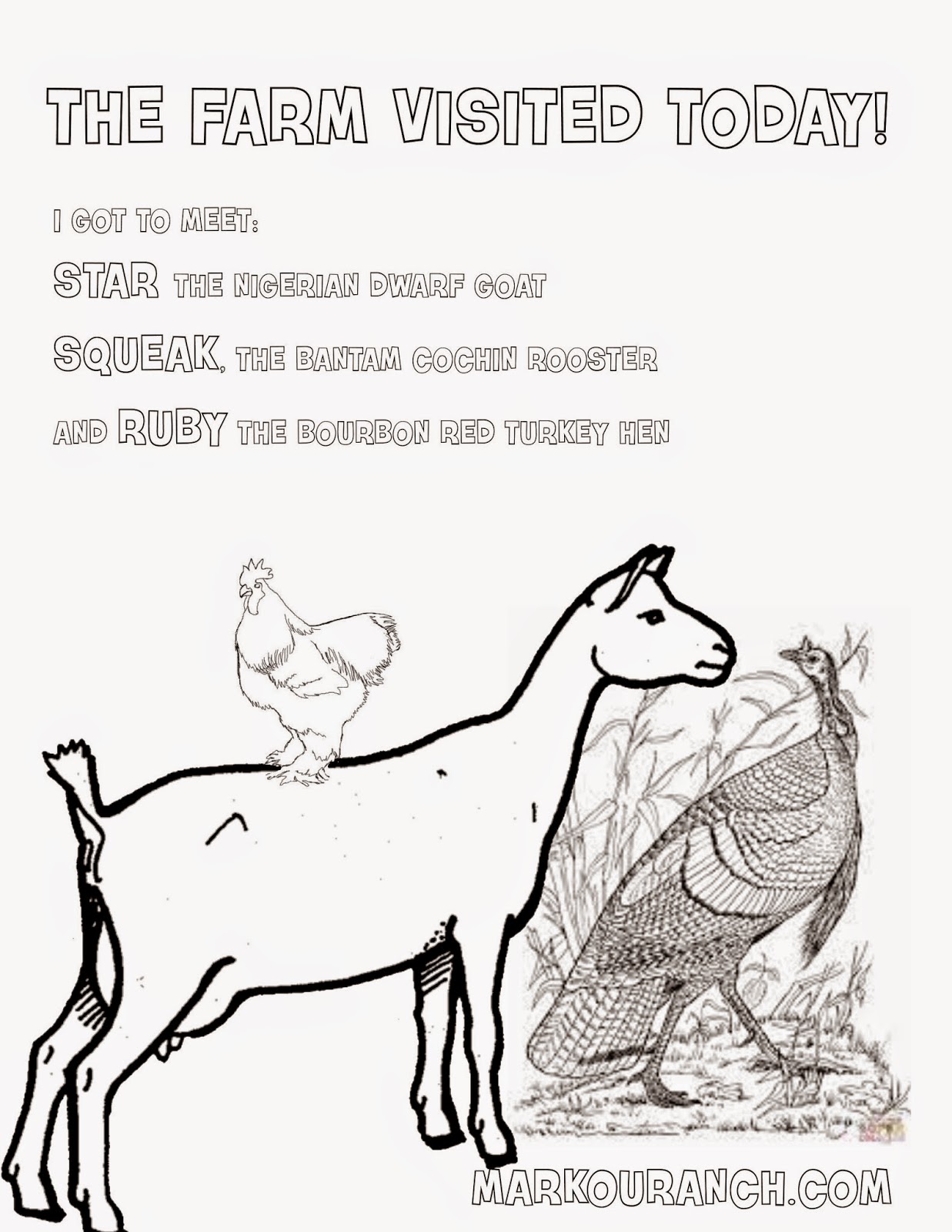
This morning I took Star the Nigerian Dwarf goat, Squeak the bantam Cochin rooster and Ruby the Bourbon Red turkey to visit the preschoolers at Wheeler Elementary school. This is always a big treat for the children as some have never seen farm animals before.
Every critter got petted and some kids even got turkey hugs in return. I talked to the children a bit about why we have goats, what people use goats for and passed around some goat milk soap so they could see. touch, and smell it. Squeak the little rooster was very tolerant of all the attention. He is our friendliest rooster and was on his best behavior. Ruby the turkey really loved all the gentle pets and rubs. She chose two special children from each class to cuddle up to.
Thank you to Ms. Tami for inviting us again this year!
Thursday, February 26, 2015
From Hobby to Business
It has been seven years since we bought our semi-rural property. Seven years of regrets and waiting, hoping, anxiety and many moments of thinking we would never be able to realize our dream of building a home there. And seven years of work. We are hoping that this year will be the one we can finally put a home there and finish the life changing move we had planned so long ago.
Our priorities have shifted from McMansion to a Minimal home that will be just enough. Our children are older and have had the privilege of experiencing farm life with all of its ups and downs.
We have gone through nice neighbors and mean neighbors and learned many valuable lessons about grumpy neighbors and nosy ones. We have learned that privacy is very valuable. While fences don't make good neighbors, they can certainly make boundaries when we are not present to enforce them with words.
In order to move forward with this plan to have a home there, it's time for the little hobby farm to become a real farm that pays its own way and with luck, also turns a profit. If you follow this blog, please send good vibes our way... 2015 is going to present many challenges.
Our priorities have shifted from McMansion to a Minimal home that will be just enough. Our children are older and have had the privilege of experiencing farm life with all of its ups and downs.
We have gone through nice neighbors and mean neighbors and learned many valuable lessons about grumpy neighbors and nosy ones. We have learned that privacy is very valuable. While fences don't make good neighbors, they can certainly make boundaries when we are not present to enforce them with words.
In order to move forward with this plan to have a home there, it's time for the little hobby farm to become a real farm that pays its own way and with luck, also turns a profit. If you follow this blog, please send good vibes our way... 2015 is going to present many challenges.
Thursday, February 5, 2015
Goodbye Lil Red Hen
The majority of our laying hens came from Murray McMurray Hatchery in the mail and I believe it was 2011 that they came to us as day old chicks. We ordered 25 because that was the minimum and we ordered a mixed assortment because I didn't really know what I wanted. We knew there would be roosters in there and we planned to eat them when the time came. Most of them we did. A few were spared and we have one left from that batch--my son's favorite. What I'm getting at is these birds were kinda old for layers. A chicken can live a long life if very well cared for--I've heard up to 12 years, but they stop laying way before then. And our layers are farm hens, no question about it.
They began life here at home in a brooder then when they were old enough, they lived in a chicken tractor at the farm. That way they were safe from predators and able to munch on greens every time I moved the tractor around. Most survived. We only lost one pretty splash hen very young.
The chickens graduated to free range in the goat pen status and lived there quite happily until something realized they were there--probably an owl or hawk. We lost a few to predators and it didn't take long to realize the birds needed to be cooped at night. Later I made the tough decision to pen them permanently for their own safety. Chickens taste good to a lot of predators and they're a fairly easy meal--especially at night.
One of our old red hens, a Rhode Island Red, wasn't doing so well a couple of days ago. She appeared to be eggbound and looked very much like a bloated penguin. I'd seen this condition on the Dr. Pol show and also looked it up in several online forums for recommendations on what to do to try and save her. I cleaned her off and washed out her egg maker slot then put her in quarantine so she wouldn't get picked on. Honestly though, the odds were not in her favor at all. She was very full of stuff and when I came today she was declining and still unable to pass anything.
I made the tough decision to put her down and bury her on the property. I've never dropped the axe on my birds--just rattlers--so it was not an easy chore for me. I brought her to the garden and let her sit in the sun for a while. She looked pretty miserable. I petted on her to keep her calm and stayed with her until her last moments.
I think it's important to understand that when we go into the responsibility of having livestock pets--because that's what the majority of my animals are, we have to accept that we will likely outlive them. Because they are livestock and tend to be high production animals, their bodies sometimes give out too soon. The kind thing to do in this case was not to allow her to slowly waste away and suffer. She had been a good hen and gave my family many eggs over the years. So, goodbye sweet little red hen. You did your job well.
They began life here at home in a brooder then when they were old enough, they lived in a chicken tractor at the farm. That way they were safe from predators and able to munch on greens every time I moved the tractor around. Most survived. We only lost one pretty splash hen very young.
The chickens graduated to free range in the goat pen status and lived there quite happily until something realized they were there--probably an owl or hawk. We lost a few to predators and it didn't take long to realize the birds needed to be cooped at night. Later I made the tough decision to pen them permanently for their own safety. Chickens taste good to a lot of predators and they're a fairly easy meal--especially at night.
One of our old red hens, a Rhode Island Red, wasn't doing so well a couple of days ago. She appeared to be eggbound and looked very much like a bloated penguin. I'd seen this condition on the Dr. Pol show and also looked it up in several online forums for recommendations on what to do to try and save her. I cleaned her off and washed out her egg maker slot then put her in quarantine so she wouldn't get picked on. Honestly though, the odds were not in her favor at all. She was very full of stuff and when I came today she was declining and still unable to pass anything.
I made the tough decision to put her down and bury her on the property. I've never dropped the axe on my birds--just rattlers--so it was not an easy chore for me. I brought her to the garden and let her sit in the sun for a while. She looked pretty miserable. I petted on her to keep her calm and stayed with her until her last moments.
I think it's important to understand that when we go into the responsibility of having livestock pets--because that's what the majority of my animals are, we have to accept that we will likely outlive them. Because they are livestock and tend to be high production animals, their bodies sometimes give out too soon. The kind thing to do in this case was not to allow her to slowly waste away and suffer. She had been a good hen and gave my family many eggs over the years. So, goodbye sweet little red hen. You did your job well.
Sunday, January 4, 2015
New Year's Snow in Tucson
New Year's Eve was spent at a friend's house near the ranch. We did chores later than usual that morning, knowing we'd be doing them well after midnight for the second round. Flakes of snow came fluttering down as we set off fireworks in our friend's driveway. For Tucson, this is a pretty big deal.
The snow stuck and had blanketed everything when we showed up to check on the ranch in the wee hours of January 1, 2015. I have learned not to fight too much with Mother Nature, so there is nothing covered with blankets to hold off the freeze. The plants need to go dormant for winter and be able to survive in our funky desert microclimate, otherwise it becomes far too much work and stress on me to try and baby them. Pictured is the raised bed with kale growing in it. And the kale, so far, has toughed it out.
Tuesday, December 30, 2014
Artichokes
I planted artichokes in the raised beds of the Three Sisters Garden in 2012. They produced well. I picked the blooms and ate artichokes until I got tired of them and let their flowers run their course.
Artichokes are related to the thistle plant. If you let them go to seed, they make spectacular purple flowers that eventually dry out. This triggers the plant to go dormant and die back.
They are perennials, which means they will return year after year, sprouting back up like a Phoenix rising from its ashes.
My artichokes have been very low maintenance. I've even stopped watering them altogether. They are growing in a raised bed fertilized with composted cow manure and shaded by Canary Island date palms and wild amaranth when in season.
I went through last week and cut all the dead from the plants, discovering new growth beneath. All of the plants had flowers still attached and I sat and picked out the seeds, pictured below. Come spring, I'll drop them in the soil and hopefully have many more artichoke plants in the future.
Artichokes are related to the thistle plant. If you let them go to seed, they make spectacular purple flowers that eventually dry out. This triggers the plant to go dormant and die back.
They are perennials, which means they will return year after year, sprouting back up like a Phoenix rising from its ashes.
My artichokes have been very low maintenance. I've even stopped watering them altogether. They are growing in a raised bed fertilized with composted cow manure and shaded by Canary Island date palms and wild amaranth when in season.
I went through last week and cut all the dead from the plants, discovering new growth beneath. All of the plants had flowers still attached and I sat and picked out the seeds, pictured below. Come spring, I'll drop them in the soil and hopefully have many more artichoke plants in the future.
Barren Space
Here is a section of this barren land behind the cow corral that I have decided to experiment with. Old fashioned furrows of earth, dug up with a hoe and layered with compost and mulch were slowly added over the course of a week. (The cows were fascinated.)
After they were built, I planted mangel seeds and sprinkled the rows with a pasture seed mix appropriate for our climate. I watered once and decided to let nature take over from there. This spot is far from the reach of the hose and I had to connect three hoses together to get to it.
It took a few weeks of waiting. And even though it's winter here, we did get some rains. I also noticed that the dew forming in the mornings was watering these little furrows daily.
Some days the dew forms frost on the rows and is melted down into the earth once the sun comes up, watering naturally.
I was skeptical that it would work, but my doubts were soon laid to rest...
Sustainability has always been my goal, and the more food I can grow for my livestock, the better. When the weather warms up, I plan to drop in organic, non GMO fodder corn seeds and transplant some mesquite trees to help nurture this once barren space.
Sunday, October 26, 2014
Fleece Drying Table
This handy dandy table was made from scraps around the ranch: 4 thick beams, two long pine boards, two short ones, and a couple of pieces of old fencing. The top is covered with plastic bird netting. Mom and I built it in about thirty minutes and it has made the washing and drying of fleece much easier.
Big Rattler
There is construction going on to the west and east of the ranch. That always stirs up wildlife and gets them on the move to new places. Unfortunately for this big guy, taking up residence underneath my camper where my dog naps was not a good choice:
He was 5 feet 2 inches long without his head and he was pretty scary. Max let us know he was there and knew enough not to get bitten. I have never seen a rattlesnake this big in my life and to have it right beneath where I work every day was unsettling to say the least.
Pallet Privacy Screen on a Budget
In recent months my neighbors have not been as friendly as when we first took ownership of the property. They like to watch me. A lot. And talk about what they see to each other--not in a nice way. (Since this post, one has moved and the other has been evicted. Another has their property up for sale. I suspect their displeasure has more to do with the failing economy and how it has affected them. A a man of authority told me not long ago that when the economy goes bad, many neighbors look for a scapegoat to blame their troubles on or to commiserate about. Lucky me.)
One of our ramadas is used to host private barbecues and gatherings from time to time and since I don't enjoy people staring at me or my guests, I decided there needed to be a privacy screen installed. I'm always on a budget and I have a lot of leftover pallets around that came in with hay deliveries over the years, so rather than take them to the trash, Mom and I repurposed them into a country style privacy screen for the party spot.
This screen was created using 8 pallets, some leftover wood to fill in any gaps, and a few fence boards to cover the seam. I was going to leave the screen plain, but Mom suggested a false door. That made me think it ought to look like something of importance that would give the curious neighbors more to ponder and discuss. (Perhaps that would take their mind off their own troubles.) So I set up a General Store for all your old fashioned necessary sundries.
One of our ramadas is used to host private barbecues and gatherings from time to time and since I don't enjoy people staring at me or my guests, I decided there needed to be a privacy screen installed. I'm always on a budget and I have a lot of leftover pallets around that came in with hay deliveries over the years, so rather than take them to the trash, Mom and I repurposed them into a country style privacy screen for the party spot.
This screen was created using 8 pallets, some leftover wood to fill in any gaps, and a few fence boards to cover the seam. I was going to leave the screen plain, but Mom suggested a false door. That made me think it ought to look like something of importance that would give the curious neighbors more to ponder and discuss. (Perhaps that would take their mind off their own troubles.) So I set up a General Store for all your old fashioned necessary sundries.
How to Hot Compost on a Budget
Poop management is a daily job here at the ranch. One of the best ways I've come up with to keep on top of this beneficial chore is to hot compost all the animal waste that my critters make for me.
Dark brown, crumbly compost is an excellent growing medium for your garden. If you have farmy critters that make you fresh pies and beans in the form of their doodoo, try this easy method to get that stuff transformed into soil--fast.
What You Need:
35 gallon plastic/rubber trash can (preferably black) with lid
Drill and large drill bit
Animal Poop and/or hay/straw/plant waste
Sunny Spot
Directions: Drill vent holes on the bottom and sides of your trash can. Fill with poo and plant waste, place lid on top, set in the sun to cook down. This process goes fast here in the desert heat. The manure will cook down to half its size within a week. You can build raised beds with it, add to existing beds or mix with soil. I've been using it to build up my experimental hugelkutur beds in the Three Sisters Garden and it's making pretty fast work of covering up a lot of wood real estate.
Dark brown, crumbly compost is an excellent growing medium for your garden. If you have farmy critters that make you fresh pies and beans in the form of their doodoo, try this easy method to get that stuff transformed into soil--fast.
What You Need:
35 gallon plastic/rubber trash can (preferably black) with lid
Drill and large drill bit
Animal Poop and/or hay/straw/plant waste
Sunny Spot
Directions: Drill vent holes on the bottom and sides of your trash can. Fill with poo and plant waste, place lid on top, set in the sun to cook down. This process goes fast here in the desert heat. The manure will cook down to half its size within a week. You can build raised beds with it, add to existing beds or mix with soil. I've been using it to build up my experimental hugelkutur beds in the Three Sisters Garden and it's making pretty fast work of covering up a lot of wood real estate.
Monday, September 22, 2014
September Already?
I have a lot of fleece that needs to be washed and processed so it can be spun. I have a lot of trash cans turned compost bins cooking up some black gold in anticipation of planting time. And I have a lot of empty garden beds because summer killed everything.
On the bright side, there was this big, beautiful, orange dragonfly sunning itself this morning. That makes everything better, right?
Tuesday, September 2, 2014
Flaming Rope
Unfortunately, this poor girl had to wait two weeks after her buddies were sheared because I did something stupid. If you don't ever have to lasso anything, count yourself lucky. If you do ever have to lasso and you don't know what you're doing, remember rule number one. ALWAYS WEAR GLOVES. It seems simple really. Common sense even. But sometimes you might get really excited because you've got the rope and the sheep is like RIGHT THERE. And you know you can just wham bam lasso that sheep on the very first toss.
But trust me, a rope burn hurts. It can rip off your skin and leave you with blisters and pain for two weeks straight. You'll be real embarrassed about how stupid you were for tossing that lasso even if you did catch the sheep on the first try...
And leave poor sheep number four for the day when your hand heals all up and you can actually use it again for regular day-to-day stuff like grasping a pen, typing on a keyboard, milking your goat or cow--or holding on to the steering wheel of your truck. Let's not even talk about sewing or handshakes. Ew handshakes with a rope-burned zombie apocalypse hand. Gross!
So two weeks later, sheepie number four was quite happy to see me. I think she remembered that I gave out free haircuts. She stood right there, still and eyeing me when I (with my gloves on) gently dropped the lasso around her neck. She didn't even move when I tied the other end to the post. She was a good girl the whole time and it only took me about 20 minutes to baldify her and return her back to her buddies.
And I highly recommend keeping superglue handy as an instant bandage. It helped me so much. I wouldn't have been able to shear a single sheepie that day if I hadn't glued the heck out of myself that morning.
RULE #1 of Lassoing: Always wear your gloves.
Saturday, July 12, 2014
Thunder in July
Karma's first calf, a little bull the kids named Thunder, was born right on schedule on the 4th of July amidst early fireworks and gentle rainstorms. We were not present when he arrived, but had apparently just missed it as evidenced by the afterbirth. He is reddish brown, is very healthy and playful. He particularly enjoys the dog, Max. Each on one side of the corral, they play chase.
Since Karma had never been milked before, she has been going through some training to get over her anxiety. She and her little Thunder are in "milk jail" a method that worked for me in the past with goats. I put in a temporary small corral where both are kept beside the milking stall. Karma has never liked the stall and stanchion as she has had to undergo medical treatment in there, shots, tags, tattooing and she associates it with bad things. I tried to coax her into the milk stall with food and even sweet feed would not change her mind. As a last resort, I dropped a lasso around her neck that first time and heaved her in. Instead of closing the stanchion, I tied the lasso to a post and went to work milking. Thankfully, she doesn't dance around like her mother often did and her kicks thus far, are in slow motion and extremely gentle.
Thunder nursed soon after his birth and is a good eater. He is half mini and because Jerseys are bred to make more milk than one calf can take, it's easy to share the milking with him. He takes whatever he needs and I take whatever I need. Karma gets a massive bin of alfalfa, Bermuda and a bit of sweet feed and everyone seems content so far.
I feel as though I am relearning a new skill since every animal is different when it comes to milking. Karma has good front teats and Thunder prefers them, so he's used them and stretched them out a bit. The back teats are harder to milk out, so my guess is that he doesn't favor them as much. I figure he gets the front and I get the back until he can catch up some more.
Thunder is much more curious than Karma was as a calf. He will come right up to us and sniff us, checking out what's going on. Like any baby, he eats, sleeps, and poops a lot. Milking works best when he joins his mama in the stall as she is calmer having him where she can keep an eye on him.
It took a few days for Karma to get the milk routine down. Now she knows what the schedule is and I often find her waiting in the stall for me.
I don't use the stanchion because I think it frightens her. I come in from the front and gently loop the lasso over her horns and fasten it to the post as she eats. This keeps her in place and lets her move her head quite a bit but doesn't allow for her to leave.
She does have a little edema (swelling) in her navel. This began before the birth. I read several articles and it seems to be normal and should go away in a couple of weeks. It doesn't seem to bother her.
Having her in the stall each day has given me the opportunity to try the Dremel on her hooves. When she was a calf, I could easily lift her feet up and trim her hooves like a farrier would a horse. But now that she's full grown, she can simply kick her leg free of my hold and I am not strong enough to hold on. I have to say, the cordless Dremel is a little slower than the nippers, but it works well enough and is much more precise.
It's nice to have fresh cow milk again. I've made butter, pudding, cheese and smoothies. It's so delicious and rich--hard to describe to anyone who has not tried it.
Since Karma had never been milked before, she has been going through some training to get over her anxiety. She and her little Thunder are in "milk jail" a method that worked for me in the past with goats. I put in a temporary small corral where both are kept beside the milking stall. Karma has never liked the stall and stanchion as she has had to undergo medical treatment in there, shots, tags, tattooing and she associates it with bad things. I tried to coax her into the milk stall with food and even sweet feed would not change her mind. As a last resort, I dropped a lasso around her neck that first time and heaved her in. Instead of closing the stanchion, I tied the lasso to a post and went to work milking. Thankfully, she doesn't dance around like her mother often did and her kicks thus far, are in slow motion and extremely gentle.
Thunder nursed soon after his birth and is a good eater. He is half mini and because Jerseys are bred to make more milk than one calf can take, it's easy to share the milking with him. He takes whatever he needs and I take whatever I need. Karma gets a massive bin of alfalfa, Bermuda and a bit of sweet feed and everyone seems content so far.
I feel as though I am relearning a new skill since every animal is different when it comes to milking. Karma has good front teats and Thunder prefers them, so he's used them and stretched them out a bit. The back teats are harder to milk out, so my guess is that he doesn't favor them as much. I figure he gets the front and I get the back until he can catch up some more.
Thunder is much more curious than Karma was as a calf. He will come right up to us and sniff us, checking out what's going on. Like any baby, he eats, sleeps, and poops a lot. Milking works best when he joins his mama in the stall as she is calmer having him where she can keep an eye on him.
It took a few days for Karma to get the milk routine down. Now she knows what the schedule is and I often find her waiting in the stall for me.
I don't use the stanchion because I think it frightens her. I come in from the front and gently loop the lasso over her horns and fasten it to the post as she eats. This keeps her in place and lets her move her head quite a bit but doesn't allow for her to leave.
She does have a little edema (swelling) in her navel. This began before the birth. I read several articles and it seems to be normal and should go away in a couple of weeks. It doesn't seem to bother her.
Having her in the stall each day has given me the opportunity to try the Dremel on her hooves. When she was a calf, I could easily lift her feet up and trim her hooves like a farrier would a horse. But now that she's full grown, she can simply kick her leg free of my hold and I am not strong enough to hold on. I have to say, the cordless Dremel is a little slower than the nippers, but it works well enough and is much more precise.
It's nice to have fresh cow milk again. I've made butter, pudding, cheese and smoothies. It's so delicious and rich--hard to describe to anyone who has not tried it.
Monday, June 30, 2014
Karma Update
![]() |
| Cookie eyeing me as I snap a pic of her buddy's udder. |
Karma has taken her pregnancy well. She is ever the rascal and I don't think I'll come to completely trust her since she has horns and knows how to use them. She's whacked me with them a few times. As long as I carry a big stick/rake/shovel she seems to avoid me. I use the tools as a shield should she decide I need a good impaling. It should be interesting to see how I'm going to convince her that she needs to share some milk with me...
Since she was a calf, I have rubbed her sides and touched her udder and teats to get her used to the whole concept. She's not bothered by it. She'll occasionally look back at me and then continue eating. As long as I don't try to make her go anywhere or attempt to trim her hooves, she tolerates me.
Karma has a nice womanly figure and looks ready to pop at any moment. In the mornings, she tends to be lazing in the sun in the sandy part of her corral, chewing her cud. She's considerably wider and mellower. She allows me to pet on her more often than she did pre-pregnancy.
Her face is darkening which reminds me of her mother. In fact, if not for the horns, she would look a lot more like Gucci.
I hope I can be there when she gives borth since I missed her birth. Some animals seem to wait until I'm there as if they appreciate a helping hand if need be. Some are sneaky about it, and go .covert, hiding out and silently handling everything on their own. Here's hoping for a girl...
Three Sisters Garden, Summer 2014
I imagine summer in Tucson is like winter in states that get snow. It's oppressive, wearing away at a person until he or she wants to give up fighting and let nature do what it's going to do. In the garden I've had some success with the Three Sisters section. It's really only half a garden since only 5 rows are in use. 3 rows aren't done and one was just build and needs to set a while before it can be planted. The corn has done so well this year in height. In the years past the corn only grew 2 or 3 feet then died. There was poor pollination resulting in less than ten (really deliscious) kernels on each cob. IN the past I was planting hybrid corn. I can't say if that was the problem, or if the soil just wasn't right.
This year I'm hopeful for good corn. I walk the rows and pollinate by hand to give those kernels a kickstart. I planted every week, so that the crop might come in succession rather than all at once. Watering was done with mostly buries soaker hoses. The Three Sisters garden is only about 3 years old. It was originally going to be a pasture, but it never took hold.
This year's corn is all heirloom. It is 7 feet tall in some places and keeps going. I love to stand between the rows when the wind blows and listen to the whispering leaves. It's like a little hideout. No one can see me in there. It's shady and peaceful. It reminds me of my parents' garden in Phoenix when I was child.
Winter crops are still growing in the Three Sisters garden: brocolli, kale, Brussels Sprouts, and Cauliflower. I don't know why! You'd think the heat would have offed them all by now. We like to make kale chips in the over with olive oil and parmesan. Tasty and healthy.
The zucchini is coming in. It's always amazing to me how you can turn your back on the zukes for a day and end up with gigantic monster squash. They too, remind me of the garden in Phoenix. My mom would slice the giant zukes thinly, batter and fry them. Mmmm. I think I'll do that with the one I picked today!
This year I'm hopeful for good corn. I walk the rows and pollinate by hand to give those kernels a kickstart. I planted every week, so that the crop might come in succession rather than all at once. Watering was done with mostly buries soaker hoses. The Three Sisters garden is only about 3 years old. It was originally going to be a pasture, but it never took hold.
This year's corn is all heirloom. It is 7 feet tall in some places and keeps going. I love to stand between the rows when the wind blows and listen to the whispering leaves. It's like a little hideout. No one can see me in there. It's shady and peaceful. It reminds me of my parents' garden in Phoenix when I was child.
Winter crops are still growing in the Three Sisters garden: brocolli, kale, Brussels Sprouts, and Cauliflower. I don't know why! You'd think the heat would have offed them all by now. We like to make kale chips in the over with olive oil and parmesan. Tasty and healthy.
The zucchini is coming in. It's always amazing to me how you can turn your back on the zukes for a day and end up with gigantic monster squash. They too, remind me of the garden in Phoenix. My mom would slice the giant zukes thinly, batter and fry them. Mmmm. I think I'll do that with the one I picked today!
Thursday, May 15, 2014
Shearing and Spinning
So there's this man who has sheep not far from my hobby farm, and he's neighbors with the owner of the petting zoo where some of my goats and sheep are. He raises his sheep for meat and doesn't know what breed they are. Last year when he had his sheep sheared, he tossed the wool, having no use for it. So it was suggested that I go on over there this year and shear his sheep in exchange for the wool.
He has seven sheep and a baby lamb--likely more on the way. I managed to get three sheared in a few hours. That time included the lassoing (done by the owner) and herding (done by both of us and a reluctant dog) as well. It was a pleasant morning, with a nice breeze coming in from the west. I got to be in pasture under nice shady trees.
I'm not a fast shearer. The only experience I have is with my dearly departed Muffy and her daughter, Ginger. (Ginger lives at the petting zoo now.) I shear by hand with no electricity. Prior to having sheep, I swore I'd never have wool sheep because it seemed like such a pain in the behind. Now I find shearing very fun. There's a certain challenge to it, and the best part is, these are not my sheep so I get to take the wool and go.
Here are the fleeces set to dry after being soaked in Kookabura scour:
Here are a couple of close-ups of the fleeces:
Here is a basket of fleece pulled by hand into roving:
I don't know what kind of sheep his sheep are either, but their fleece is pretty nice for spinning. I have a lot of learning to do when it comes to this hobby, so it's nice to have some fleece to practice with.
For now, when people ask me what I make with all this, my answer is still yarn:
He has seven sheep and a baby lamb--likely more on the way. I managed to get three sheared in a few hours. That time included the lassoing (done by the owner) and herding (done by both of us and a reluctant dog) as well. It was a pleasant morning, with a nice breeze coming in from the west. I got to be in pasture under nice shady trees.
I'm not a fast shearer. The only experience I have is with my dearly departed Muffy and her daughter, Ginger. (Ginger lives at the petting zoo now.) I shear by hand with no electricity. Prior to having sheep, I swore I'd never have wool sheep because it seemed like such a pain in the behind. Now I find shearing very fun. There's a certain challenge to it, and the best part is, these are not my sheep so I get to take the wool and go.
Here are the fleeces set to dry after being soaked in Kookabura scour:
Here are a couple of close-ups of the fleeces:
Here is a basket of fleece pulled by hand into roving:
I don't know what kind of sheep his sheep are either, but their fleece is pretty nice for spinning. I have a lot of learning to do when it comes to this hobby, so it's nice to have some fleece to practice with.
For now, when people ask me what I make with all this, my answer is still yarn:
Subscribe to:
Posts (Atom)